
Jun 24 , 2026
The Calm Home Aesthetic: How to Create a Space That Feels Grounded, Soft, and Intentional
There are homes you walk into and immediately feel something shift.
Because they are expensive.
Because they are perfectly styled.
But because they feel quiet in a way the mind understands.
A calm home aesthetic is not a trend, it is a return to something the nervous system recognises. A space where the body exhales, because the environment is no longer asking it to perform.
And what is interesting is this: most people don’t realise they are already designing their emotional state through their environment.
Because the mind and space are not separate.
They mirror each other.
And once you see that, you can’t unsee it.
🌬️ What Makes a Home Feel Calm?
Designers often describe calming interiors in simple terms, but beneath those terms is something deeper, a pattern of sensory coherence.
A calm home usually includes:
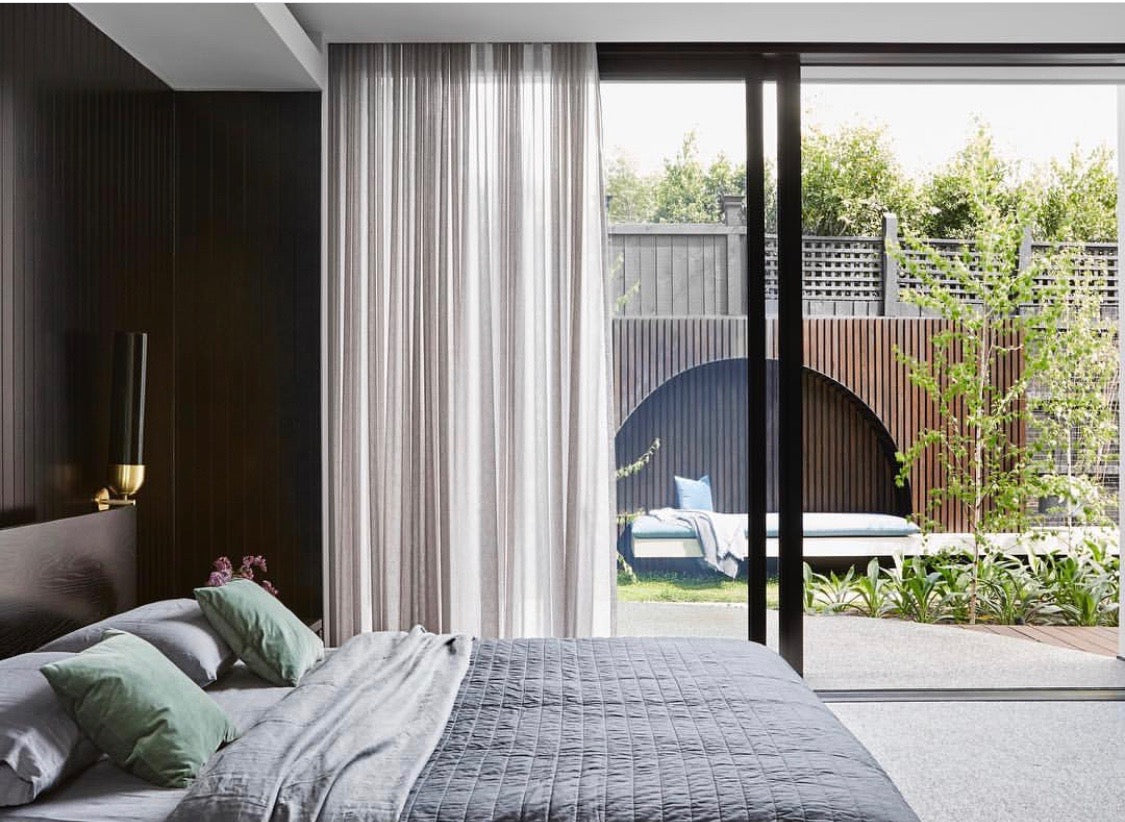
- Soft, neutral colour palettes that reduce visual tension
- Natural textures like linen, wood, clay, and stone
- Gentle lighting that avoids harsh contrast
- Clear surfaces that reduce cognitive load
- Organic shapes that feel less rigid to the eye
Because the nervous system responds not to decoration, but to consistency of signal.
When everything is shouting, the mind tightens.
When everything is coherent, the mind softens.
And in that softening, something important happens: you begin to notice how little you actually need to feel at home in yourself.
🪶 The Psychology Behind Calm Interiors
There is a reason minimalist and nature-inspired interiors continue to grow in popularity.
Because people are not only decorating homes, they are unconsciously regulating their internal state.
When visual input is reduced, the brain spends less energy filtering noise. This creates a subtle but powerful shift in attention.
You might notice:
- breathing slows
- thoughts space out
- decision fatigue decreases
- emotional reactivity softens
And it happens because the environment stops competing for attention.
A calm space does not demand focus.
It returns it.
🌾 The Role of Nature in Emotional Design
One of the most consistent findings in interior psychology is that natural materials and organic forms create a sense of grounding.
Wood, linen, plants, natural light, these are not aesthetic choices alone. They are sensory cues that signal safety and familiarity.
There is a reason even the smallest plant can change how a room feels.
Because something living in the space changes how the space is perceived.
It introduces rhythm.
It introduces breath.
It introduces the sense that the room is not fixed, but gently alive.
🕯️ Light as Emotional Architecture
Light is often underestimated in home design.
But light is not decoration, it is structure.
Harsh overhead lighting flattens a room emotionally. It creates exposure without softness.
Whereas layered lighting, lamps, warm tones, directional glow, creates depth and intimacy.
And in that softness, the mind begins to associate the space with rest.
Because the brain reads light as time, mood, and safety all at once.
A room can feel like morning, or evening, or pause, depending entirely on how it is lit.
🪞 Why Simplicity Feels Luxurious
There is a quiet paradox in design:
The more visually simple a space becomes, the more emotionally rich it feels.
Not because simplicity is empty, but because it removes distraction.
And when distraction fades, perception deepens.
A single textured chair becomes more noticeable.
A shadow across a wall becomes part of the atmosphere.
Even silence becomes something you can sense.
This is why minimalist interiors often feel expensive, not because of what is added, but because of what is removed.
🌿 Creating Your Own Calm Home Aesthetic
If you begin to design from feeling rather than furniture, something subtle shifts.
Instead of asking:
“What should I put here?”
You begin to ask:
“What do I want this space to do to me when I enter it?”
And from that question, choices become clearer.
You may find yourself removing before adding.
Softening before decorating.
Simplifying before styling.
Because the goal is not perfection.
The goal is coherence.
A home that does not pull you in multiple directions at once, but gently holds you in one continuous emotional tone.
🌙 Final Thought
A home is never just a collection of objects.
It is a continuous conversation between environment and attention.
And once that conversation becomes softer, something interesting happens.
You don’t just notice your space differently.
You begin to notice yourself differently inside it.
Because the room was never separate from you.
It was always responding.


